How to Replace Google Analytics with Abtz Analytics
Side projects are a labor of love. You build them in the margins of your day—early mornings, late nights, weekends. Whether it is a personal blog, a SaaS experiment, or a tool you built to solve your own problem, you eventually face the same question: Are people actually using this?
That question usually leads straight to Google Analytics. It is familiar, it is powerful, and it is free. But "free" can be misleading. For side projects in particular, the real cost of Google Analytics is not money. It is complexity, privacy liability, performance, and the slow drift away from the simple thing you set out to build.
Switching to a lightweight alternative like Abtz Analytics is not about rejecting Google. It is about choosing a tool that respects the spirit of a side project: small, focused, and sustainable.

The Hidden Costs of "Free"
Google Analytics costs zero dollars to install. But it extracts payment in other currencies.
Time. The interface is built for enterprises, not individuals. Every login is a maze of dashboards, attribution models, and configuration prompts that have nothing to do with a single-page app or a modest blog. You did not start a side project to become an analytics administrator.
Compliance burden. GDPR, CCPA, and the ePrivacy Directive mean that using Google Analytics often requires cookie banners, consent management, data processing agreements, and ongoing legal vigilance. For a side project, that is a part-time job you did not apply for.
Performance. The Google Analytics script is not lightweight. On a small site, the tracking code can represent a meaningful slice of your total page weight. For users on slower connections, that is a real cost in load time and responsiveness.
Data ownership. Your traffic data is not really yours. It lives inside Google's ecosystem, shaped by their sampling methods, subject to their retention policies, and intertwined with their advertising business. A side project deserves its own history.
When you add it all up, "free" starts to look expensive.
Why Lightweight Analytics Wins in the Long Run
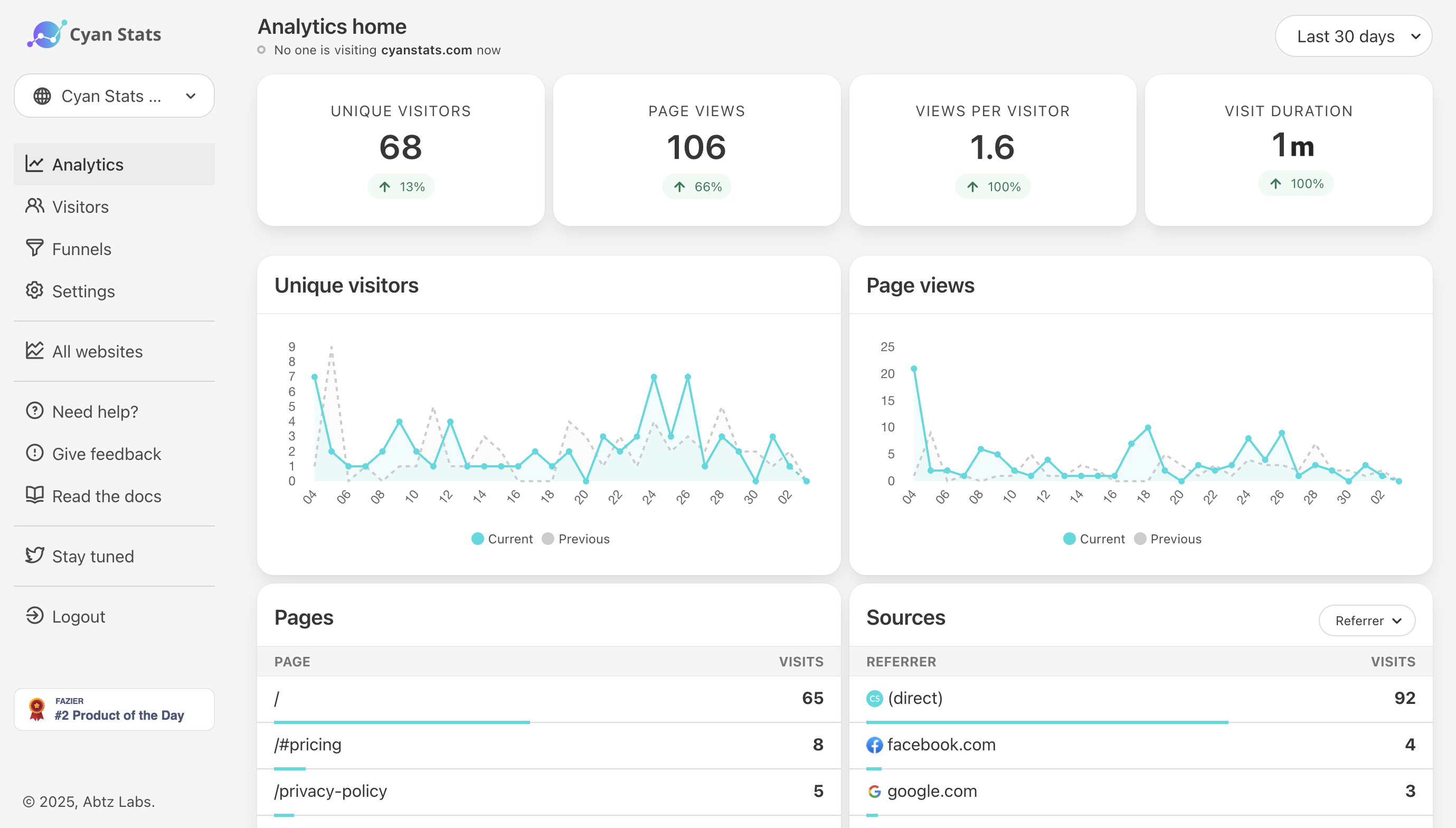
A lightweight analytics tool does less, and that is exactly what you want. It tracks the metrics that matter—page views, referrers, popular content, visitor geography—without the bloat. The long-term benefits are quiet but meaningful.
Less maintenance. You install a small script, and you move on. There are no quarterly reviews of privacy settings, no urgent migrations when Google sunsets a version, no cookie banners to style and maintain.
Faster sites. A smaller tracking footprint means faster load times. Over months and years, that compounds into better user experience and better search rankings.
Privacy by default. Modern lightweight analytics are built for a post-cookie world. They often work without collecting personal data, which means fewer legal headaches and more trust from your visitors.
Mental clarity. A simple dashboard shows you what you need to know without shouting. You check your stats, learn what is working, and get back to building.

What to Look for in an Alternative
If you are considering a move, here are the qualities that matter for a side project:
- Small script size. Under a few kilobytes is ideal.
- No cookie banners required. Look for tools that do not use cookies or collect personally identifiable information.
- Simple, durable metrics. Page views, referrers, devices, and geographic trends cover 90% of what you actually need.
- Easy export. You should be able to take your data with you if the tool ever disappears.
- Sensible pricing. Free tiers are fine for low traffic, but predictable pricing is better than venture-subsidized "free" that can change overnight.
Abtz Analytics was built with these qualities in mind. It is designed for builders who want to understand their traffic without surrendering their time, their site's speed, or their visitors' privacy.
Migrating Is Simpler Than You Think
The actual process of switching is usually the easiest part. It looks something like this:
- Audit your current setup. Note the key reports you actually check in Google Analytics. Most people use only a fraction of what is available.
- Run both in parallel. Install your new analytics alongside Google Analytics for a week or two. Compare the numbers and build confidence.
- Remove the old script. Once you trust the new data, delete the Google Analytics snippet.
- Update your privacy policy. Remove references to Google Analytics and cookie-based tracking if they no longer apply.
That is it. No database migrations. No API rewrites. Just a cleaner page and a clearer conscience.
A Sustainable Choice
Side projects thrive on constraints. A limited budget, limited time, and limited attention force you to focus on what matters. Your analytics tool should respect those same constraints.
Choosing a lightweight alternative is not a downgrade. It is a decision to keep your project small, fast, and resilient over the long term. The best tool is the one that gives you just enough insight to make better decisions—and then gets out of your way.
If your current analytics feels like overhead, it probably is. There is a simpler path forward, and your future self will thank you for taking it.
Ready to make the switch? Learn more about Abtz Analytics and start your free 14-day trial—no credit card required.
About the Author
Rogerio is a seasoned Full-Stack Engineer, Product Owner, and Entrepreneur with a deep background in Information Systems. He bridges the gap between complex technical stacks and a customer-centric, product-first mindset.